
How We Assess Specialists
A company name, job title or training card alone cannot demonstrate competence for every underground water project.
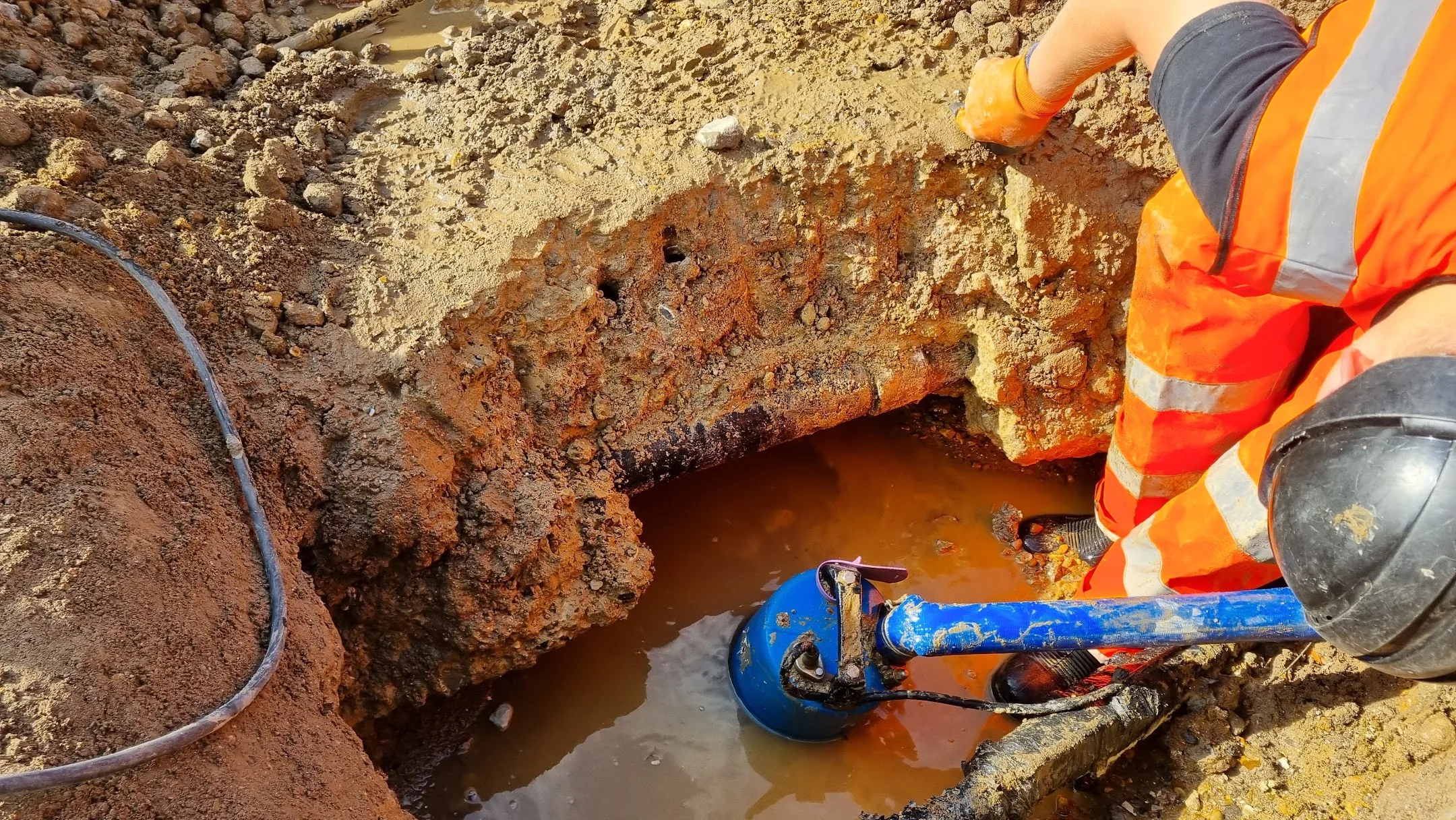
A blue fitting and valve arrangement photographed on an exposed main.
Photo: Lucking Utility Services · Original Photograph
A branched blue pipe assembly within an excavation.
Photo: CW Pipewise · Original Photograph
Wall-mounted pipework with multiple individually labelled valves.
Photo: CW Pipewise · Original Photograph1. Identify the Business and Delivery Team
Check the legal trading identity, named technical lead, people delivering the work and relevant network experience. Direct water-company employment is strong evidence. Equivalent demonstrable network experience may be considered against the same documented technical requirements.
2. Check Current Evidence
Review the insured business, £10m public liability cover and covered activities. Link water hygiene, SHEA Water and service-avoidance records to the people undertaking the work. Check approval directly with the issuing scheme, including permitted work and certification scope. Equivalent recognised schemes must be assessed for the relevant UK jurisdiction.
3. Assess Each Service Separately
Request relevant technical qualifications or assessed competence, comparable projects, references and evidence of suitable equipment and supervision. Review pipe sizes and materials, jointing methods, utility detection, excavation planning, commissioning and reinstatement appropriate to the work.
- Private domestic and shared supply pipes.
- Private commercial mains and larger pipework.
- Leak investigation, with the actual methods offered.
- Impact moling and directional drilling.
- Public-network or self-lay activities, only within confirmed approval and project permissions.
4. Record a Reasoned Decision
The assessment record should identify the evidence reviewed, assessor, decision, services accepted, restrictions and review date. A fee must never buy a positive assessment. Applicants should receive reasons for missing or rejected evidence and a route to an impartial review.
5. Keep Evidence Current
The process requires annual review and checks at relevant expiry dates. Changes in technical personnel, insurance, registrations or scope must be reported promptly. Expired or unsupported capabilities must lose their verified status until reassessed.
6. Investigate Concerns
Assess credible concerns proportionately, seek evidence and allow a response. Serious unresolved concerns may require suspension while investigated. Record the outcome and provide an appeal reviewed by someone not responsible for the original decision.
Applications and supporting evidence are received through the secure form and private review register. Current approval decisions identify the approver and evidence basis. Independent review arrangements remain under development; NDWE does not claim that owner approval is independent verification.
Explore Water Engineering Services
Find the right expertise
for your water pipework.
A true specialist trade between plumbing and groundworks.
Customer trust built on experience, training and accountability.